





![[FREE EBOOK] Strategic Vietnam IT Outsourcing: Optimizing Cost and Workforce Efficiency](https://vti.com.vn/wp-content/uploads/2026/06/ebook-it-outsourcing.png)


This June, VTI had the opportunity to be featured on Vietnam News Agency (VNA), Vietnam’s official state news agency, to discuss one of the most pressing questions shaping the technology industry today: what artificial intelligence means for the engineers behind the software.
While much of the conversation around AI in tech focuses on what it replaces, some of the most important shifts are happening at the human level – in how engineers think, what skills they prioritize, and what foundational knowledge becomes more valuable, as AI tools grow more capable.
During the interview, VTI experts shared what this transition looks like from the inside.
Not Fewer Engineers, but Different Engineers
One of the key points raised during the segment was the changing shape of demand for technical talent.
AI is gradually taking over many routine programming tasks, such as generating code, producing documentation, and accelerating repetitive development work. But rather than reducing the need for engineers, it is shifting what organizations need them to do.
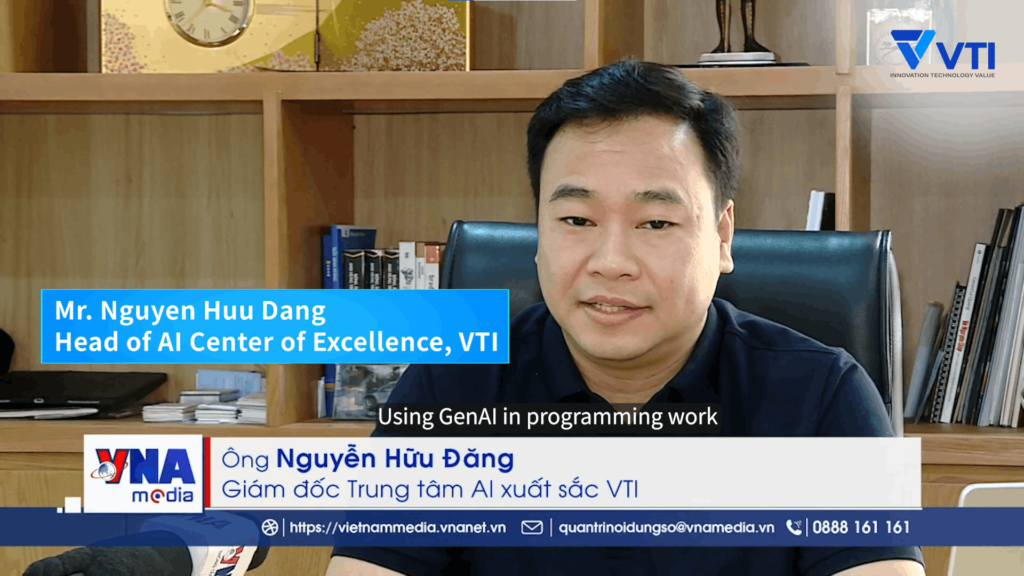
As Mr. Nguyen Huu Dang, Head of VTI’s AI Center of Excellence, noted during the interview, while AI-powered tools can generate code and documentation far faster than before, ensuring the accuracy of those outputs requires strong reading comprehension, practical experience, and the ability to verify what the model produces.
Businesses today do not face a shortage of general programmers. What they lack are engineers who can design complex systems, conduct in-depth testing, manage data at scale, and develop products where AI is not an add-on but a core component.
The Skills That Define the AI-Augmented Engineer
For engineers working alongside AI today, two things matter most: the ability to use AI effectively, and the foundational technical knowledge to evaluate what it produces.
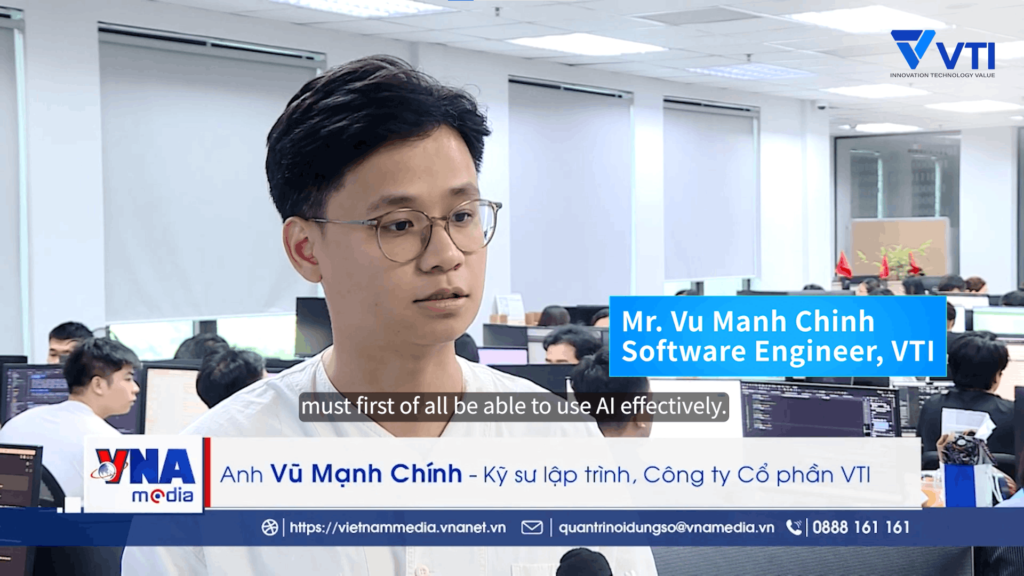
As Software Engineer Vu Manh Chinh shared from his own experience, using AI in software development requires more than knowing which tools to reach for. It demands the ability to prompt effectively, assess output quality, and detect errors that the model itself may not surface. That kind of judgment cannot be delegated; it has to be built through experience.
In the Vietnamese market today, developers with five to ten years of experience who are capable of verifying AI-generated outputs remain relatively limited in number. That gap represents both a challenge for the industry and a clear signal of where engineering careers are heading.
Preparing Engineers for the AI Era – From the Inside Out
At VTI, we believe the engineers of tomorrow are not those who simply use AI. They are those who understand it well enough to question it, verify it, and build on it with confidence.
This belief translates directly into action. Through the establishment of the AI Center of Excellence, VTI has built a dedicated engine for internal AI capability development, running regular training sessions and seminars that equip engineers at every level with the skills and knowledge to work effectively alongside AI.
But training alone is only part of the picture. VTI is actively integrating Generative AI across its entire operational landscape, from R&D and project delivery to system operations, through a multifunctional ecosystem of purpose-built AI tools:
- V-Copilot, a GenAI-powered coding assistant, accelerates software development from within the workflow itself.
- AuraOps brings intelligent automation and real-time monitoring to IT operations.
- AuraTest shortens testing cycles and reduces deployment errors through AI-powered automated testing.
The result of combining rigorous internal training with deep AI integration is an engineering culture where VTI engineers do not just use AI; they collaborate with it confidently, critically, and effectively. That synchronization has delivered measurable outcomes: across many VTI projects, time-to-market has been reduced by up to 50%, a direct reflection of engineers who understand AI well enough to harness it at full capacity.
Moving Forward
We are grateful to Vietnam News Agency for the opportunity to share our perspective on this important conversation, and we look forward to continuing our work in developing the talent and capabilities that the AI era demands.
To learn more about VTI’s AI solutions and engineering capabilities, please visit: