





![[FREE EBOOK] Strategic Vietnam IT Outsourcing: Optimizing Cost and Workforce Efficiency](https://vti.com.vn/wp-content/uploads/2026/06/ebook-it-outsourcing.png)


Across many industries, the COVID-19 pandemic is expected to deepen an already worsening labor shortage. Manufacturing in particular struggles to attract workers’ attention because of its reputation for the “3Ks” — kitsui (demanding), kitanai (dirty), and kiken (dangerous). With that background in mind, this article considers what manufacturers can do to manage production more efficiently.
Background of the Labor Shortage in Manufacturing
According to the Ministry of Economy, Trade and Industry’s report “Securing and Developing Manufacturing Talent,” the number of people employed in manufacturing fell by roughly 1.57 million over the 18 years from 2002 to 2020. The labor shortage in manufacturing has become especially severe under the impact of COVID-19 (statistics bureau data show the number of people employed in construction also fell in 2021 compared with the previous year). By 2030, global manufacturing could face a shortage of more than 8 million workers, putting US$607 billion in output at risk.
Labor Shortages Across Subsectors
Labor shortages in manufacturing are particularly acute in subsectors. The manufacturing and mining sectors are facing severe labor shortages, with more than three-quarters of companies surveyed across 36 countries reporting difficulties in recruitment.The talent shortage is particularly acute in several key industries: the semiconductor and electronics sector is projected to face a global shortage of hundreds of thousands of engineers by the end of the decade. By 2030 the aerospace and defense industry could face a workforce gap of more than 1 million people . In precision engineering and mold manufacturing, the challenge is becoming increasingly urgent as a large share of experienced workers approach retirement age, while the pipeline of younger talent remains too limited to meet demand.
Why Is There a Labor Shortage in Manufacturing?
The reason is that manufacturing work is seen as physically taxing, involves long hours away from home, and carries the risk that a single moment of carelessness could endanger a worker’s life — none of which appeals to younger workers. On top of that, an aging society means many manufacturers are short on skilled talent. As a result, manufacturing, saddled with its 3K image, is less competitive than other industries when it comes to attracting workers.
The Consequences of Labor Shortages in Manufacturing
The labor shortage in manufacturing — particularly the shortage of skilled workers — is taking a toll on manufacturers. It’s clear that companies generate profit by relying on people to make and sell products. Even when younger employees are hired, it takes considerable time before they can fully handle the work, and that gap can make it difficult to sustain operations.
The Role of Technology in Addressing the Shortage in Manufacturing
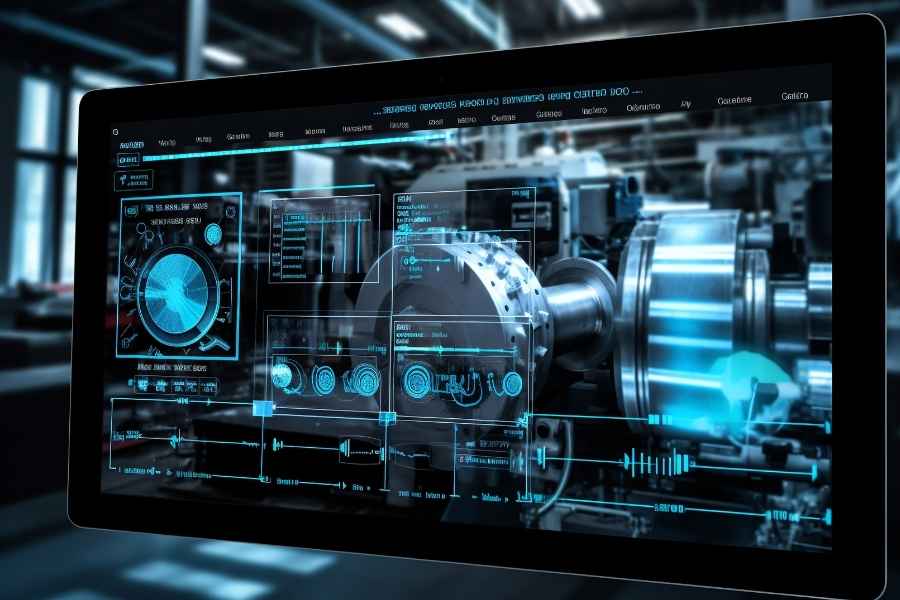
Against this backdrop, the question of how to create new value despite the labor shortage in manufacturing has come into sharp focus. In the past, before technology had advanced this far, this was a genuine challenge — but today the situation is different. With the rapid advance of technologies such as AI, IoT, and big data, companies can now streamline production even while keeping headcount to a minimum.

AI and IoT Powered Product Quality Monitoring
Traditional quality inspection relies heavily on skilled personnel, making the process labor-intensive and susceptible to human error. By integrating IoT-enabled cameras with AI-powered computer vision technologies, manufacturers can automate the detection of surface defects, dimensional deviations, and missing components in real time, improving inspection efficiency and accuracy. Continuous collection and analysis of defect data can also support faster root-cause analysis and timely corrective actions, reducing reliance on end-of-line inspection.
AI Facial Recognition for Attendance Monitoring and Check-in/Check-out
In the context of labor shortages, manual shift management and attendance tracking methods, not only consume significant HR resources but are also susceptible to fraudulent practices. AI-powered facial recognition enables employees to check in and check out within seconds while automatically synchronizing attendance data with payroll and workforce management systems, thereby eliminating manual data entry. For manufacturing facilities employing thousands of shift-based workers, this approach can directly reduce the administrative burden on HR teams that are already operating with limited staffing capacity.
Predictive Maintenance with IoT and AI
When experienced maintenance technicians are in short supply, manufacturers may struggle to detect equipment issues before they lead to breakdowns, resulting in unplanned downtime and production disruptions. IoT sensors continuously monitor equipment conditions by collecting data such as temperature, vibration, and electrical current, while AI analyzes these patterns to identify potential failures before they occur. This allows maintenance teams to prioritize and schedule preventive interventions in advance, helping maintain operational continuity even with limited staffing.
AI and Big Data Enabled Workplace Safety Monitoring
By deploying AI-powered cameras at high-risk locations, manufacturers can automatically detect unsafe behaviors, such as improper climbing, failure to wear personal protective equipment (PPE), or unauthorized access to restricted areas, and provide real-time alerts to supervisors rather than relying solely on manual observation. Furthermore, accumulated risk data can be analyzed using Big Data technologies to identify safety patterns and support proactive risk prediction and accident prevention.
Robotization of Hazardous and Repetitive Tasks
Robots can take over repetitive and hazardous tasks that traditionally require continuous human involvement. Their ability to operate consistently in high-risk environments reduces exposure to workplace hazards while minimizing the need for shift rotation and repetitive training. This enables manufacturers to maintain operational continuity, particularly for positions that are difficult to fill and retain.
Automation of Specialized Equipment to Replace Manual Operations
By integrating sensors and 3D spatial mapping systems, specialized equipment can operate autonomously along predefined routes and automatically adapt to changing operating conditions without requiring continuous human intervention. This approach not only improves operational accuracy but also reduces manufacturers’ reliance on individual workers’ skills and expertise.
The Rise of MES (Manufacturing Execution Systems) Amid a Labor Shortage in Manufacturing
Among these technologies, leading manufacturers are increasingly looking for a more comprehensive approach to managing labor shortages. Manufacturing Execution Systems (MES) powered by AI have emerged as a key technology, helping companies optimize workforce utilization, improve operational visibility, automate processes, and boost productivity.
Speeding Up the Onboarding Process
Onboarding is a critical process for any company. Whether new employees quickly adapt to their work environment and workload depends heavily on the quality of onboarding. An MES that helps accelerate onboarding is an excellent option. Through an intuitive interface, an MES gives new employees access to the information they need — training materials, work instructions, and the like. Beyond that, an MES can manage skills and integrated training certifications, and control which staff are qualified to operate specific machinery and equipment. For example, a worker might be required to maintain an OEE (Overall Equipment Effectiveness) of 60% or higher before being allowed to operate a machine independently.
Accurate, Real-Time Visualization
A key feature of an MES is that it aggregates data in real time, enabling more accurate decision-making. This delivers a range of benefits overall. For instance, tracking product status (such as stock availability) in real time removes the need for staff to physically check warehouse inventory. Another example: visualizing a factory’s production status remotely and in real time can reduce the number of management staff required.
Automatically Monitoring Processes
Manufacturers can now integrate MES systems with PLCs (Programmable Logic Controllers), IoT devices, and more, enabling automatic monitoring of production processes. The MES aggregates data on products and machinery in real time, processes it, and generates reports. This allows companies to immediately identify any problems in the production process. At the same time, MES integrates rapid technical solutions to minimize product defects and ensure better product quality.
Boosting Productivity
By using the data an MES aggregates, companies can see in real time what workers are doing and whether they are working efficiently. This makes it possible to devise measures that maximize the company’s resources. One study found that using an MES can reduce unnecessary processes by 35%, manual-entry and similar work by 75%, cumbersome procedures by 56%, and defective products by 18%.
Attracting Talent Through Advanced Technology
Adopting Industry 4.0 technology solutions and a modern work environment is expected to make it easier to attract potential candidates. One study found a growing number of workers prioritize environments equipped with efficient tools that support their work. An MES with an easy-to-use interface, or one featuring a “Helpdesk” for handling common inquiries, could well be a valuable tool for employees.
VTI Group’s MES-X
By leveraging advanced technologies such as AI together with manufacturing expertise, VTI provides a one-stop software development solution for digital transformation and business growth. We have built an ecosystem of products centered on our MES-X production management system, delivered as a comprehensive, one-stop solution.
What is the MES-X Production Management System?
The MES-X integrated production management system is made up of four core modules — MEScore (Manufacturing Execution Management System), WMS-X (Warehouse Management System), QMS-X (Quality Management System), and MMS-X (Equipment Management, Maintenance, and Inspection System) — designed to boost productivity and synchronize every entity involved in the production process.
Alongside MES-X, we also offer our proprietary AI & IoT products — BusEye, ParkingX, FaceX, LogX, Smart ENE, and Smart Monitoring System — to help accelerate DX in our customers’ factories.
+) MEScore, the Manufacturing Execution Management System: comprehensively manages the entire production process, from planning through real-time monitoring and reporting.
+) WMS-X, the Warehouse Management System: uses QR codes to manage raw materials, products, and inventory smartly in real time, reducing manual work.
+) QMS-X, the Quality Management System: manages quality from the receipt of raw materials through manufacturing and shipment, improving the production process and reducing defective products.
+) MMS-X, the Equipment Management, Maintenance, and Inspection System: creates management and maintenance plans for machinery and equipment, predicts and warns of malfunctions, and analyzes return on investment.
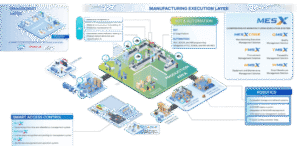
VTI Solutions’ AI-integrated smart manufacturing landscape
Summary
The labor shortage in manufacturing is no longer simply a hiring challenge. As skilled workers become increasingly scarce, manufacturers need to optimize operations with the resources they have.
Companies that adapt successfully will reduce manual work, automate repetitive and hazardous tasks, and leverage AI, IoT, robotics, and real-time data to improve productivity.
From quality inspection and maintenance to production management, technology is helping manufacturers build leaner and more efficient operations.
At VTI, we provide integrated manufacturing solutions powered by AI, IoT, and MES-X to help manufacturers reduce reliance on manual labor, improve productivity, and accelerate digital transformation. If you have any questions about AI, please feel free to contact us.
If you’d like to stay updated on the latest advanced technology news and insights, please sign up using the email box below.