





![[FREE EBOOK] Strategic Vietnam IT Outsourcing: Optimizing Cost and Workforce Efficiency](https://vti.com.vn/wp-content/uploads/2026/06/ebook-it-outsourcing.png)


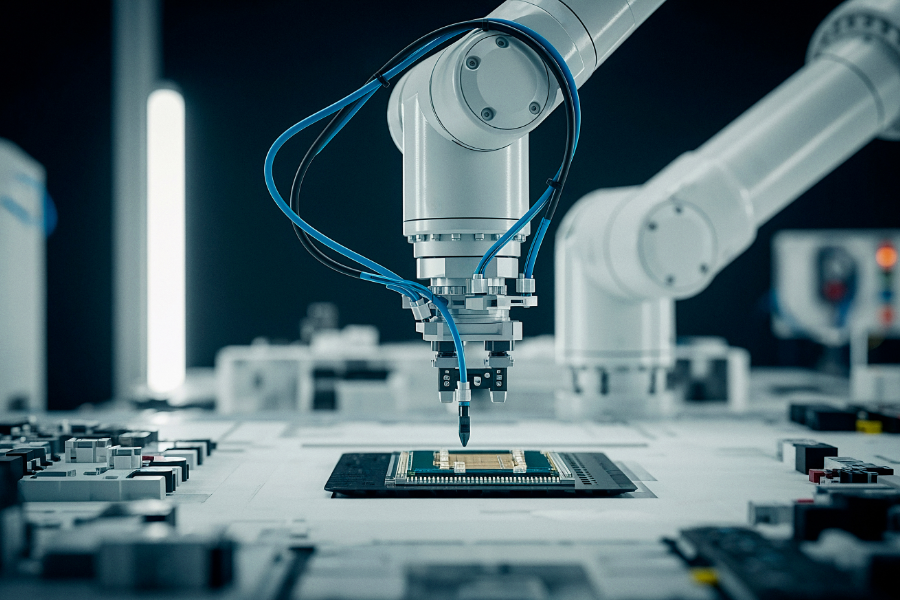
For years, Vietnam has long been known for skilled engineers, competitive costs, and a strong outsourcing culture. That reputation still holds — but it no longer captures the full picture. NVIDIA’s CEO has described Vietnam as his company’s “second home.” Qualcomm selected Hanoi for its third-largest global AI R&D center. Three forces explain why global players are taking notice: a fast-growing, AI-ready talent base, a domestic innovation ecosystem that has expanded rapidly, and a national policy framework that has made AI a legal and strategic priority.
A Powerful AI Talent Engine
According to the WIN World AI Index Survey 2025, which measured AI perception, trust, and preparedness across 40 countries, Vietnam ranked sixth overall (third globally in AI trust and fifth in AI acceptance). For a country still scaling its technical infrastructure, those numbers point to something that tends to precede capability: a workforce that is culturally and professionally ready to move with AI.
That readiness is showing up in the labor market. Vietnam’s technology workforce now exceeds 530,000 professionals, with roughly 50,000 new graduates entering the field each year (Vietnamnews, August 2024). Demand for AI-specific roles, spanning machine learning, natural language processing, and computer vision, doubled in 2025 compared to the previous year, reaching 2.5 times the level in 2023 (Vnexpress, November 2025). More than 80% of IT professionals already use AI tools in their daily work, and international employers have taken notice: cross-border hiring of high-skilled Vietnamese tech talent grew by 111% in 2024, with the United States, the United Kingdom, and Singapore leading the demand.
Building on this momentum, the government and academia have put structured investment behind the pipeline. The Semiconductor Workforce Development Programme targets 50,000 trained chip and AI engineers by 2030. In August 2025, the “Vietnam AI Academy”, developed in partnership with NVIDIA, was formally launched, bringing internationally standardized AI training to Vietnamese engineers for the first time. Leading universities in Hanoi and Ho Chi Minh City have since established dedicated AI and semiconductor training networks (Vietnamnews, October 2025), reflecting a broader convergence of government policy, academic institutions, and technology enterprises around a shared goal: building a sustainable pipeline of high-quality, AI-ready talent.

Demand for AI personnel across the broader economy is forecast to grow by 74% between 2025 and 2030. The talent pipeline being built today is a direct and deliberate response to that curve, positioning Vietnam as an increasingly credible source of AI-ready engineering talent for both domestic and global demand.
A Growing AI Innovation Ecosystem
Global technology companies are deliberate about where they place R&D infrastructure. When two of the world’s leading chipmakers independently chose Vietnam for major AI research centers in the same year, the question worth asking is what they saw that made the decision straightforward.
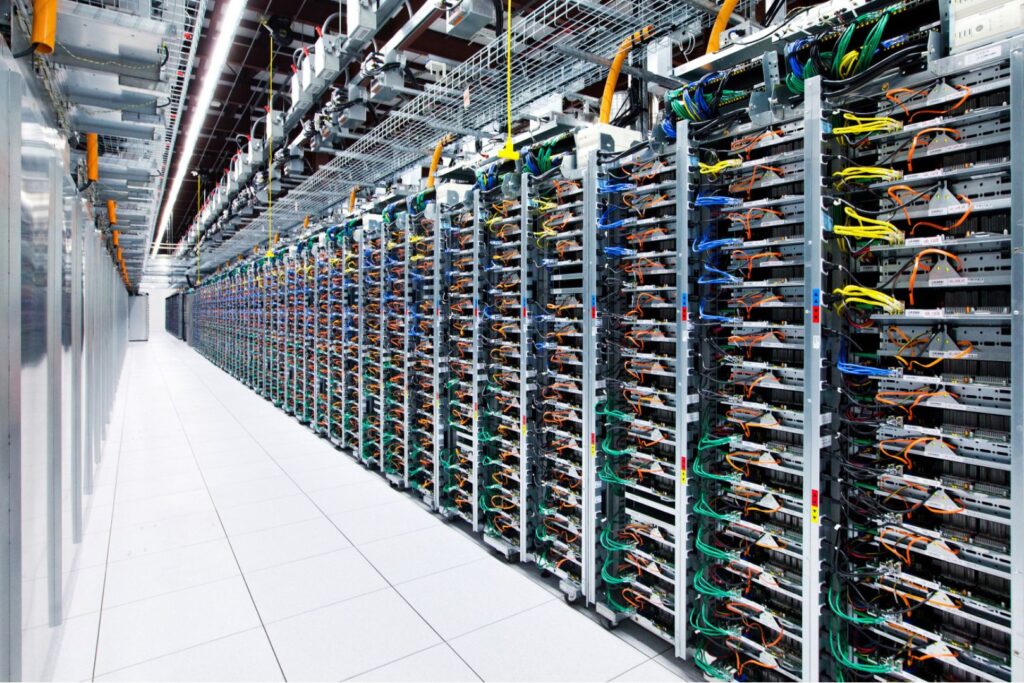
In June 2025, Qualcomm opened its third-largest global AI R&D center in Hanoi, a facility designed not just to serve Vietnam but to anchor the company’s research operations across Southeast Asia. Shortly after, NVIDIA formalized a government agreement to establish an AI R&D center and data hub in the country, backed by a multi-year investment commitment of $4 to $4.5 billion (The Investor, September 2025). For a company that is selective about where it builds, the choice of Vietnam was deliberate.
The domestic side of the ecosystem tells a parallel story. The number of AI-focused startups in Vietnam grew from roughly 60 in 2021 to nearly 300 by the end of 2024 – a 4.5-fold increase in three years – placing Vietnam second in Southeast Asia for AI startup volume, behind only Singapore. Venture funding tracked that growth closely, rising from $80 million in 2024 to over $130 million in Q1 2025 alone, drawing interest from investors across the United States, Singapore, and Japan.
Taken together, these signals point to something more specific than general tech growth. While Singapore has established itself as the region’s center for AI policy and capital, and Malaysia as its infrastructure hub, Vietnam is emerging as Southeast Asia’s primary engine for AI research, development, and engineering output – a role global partners are actively selecting it for, rather than one it is simply aspiring to.
Strong National Support for AI
Vietnam’s AI ambitions are not running ahead of its policy framework – the framework is actively driving them.
In December 2025, Vietnam became the first country in Southeast Asia, and one of a small group globally, alongside the EU, South Korea, and Japan, to establish a dedicated legal framework for artificial intelligence. The law, which took effect on March 1, 2026, was designed with a clear orientation: not to restrict AI, but to create the conditions for it to grow responsibly. Its stated goal is to promote AI as a key driver of growth, innovation, and sustainable development – a framing that reflects a government treating AI as an economic priority rather than a compliance problem.
In practical terms, the law addresses the concerns that matter most to businesses operating in or entering the Vietnamese market. It establishes clear principles for AI development, testing, and deployment, alongside sandbox mechanisms, R&D incentives, and provisions covering data, computing infrastructure, and the protection of businesses’ rights and interests. For companies building AI products across regulated sectors, the risk-based classification system introduces a predictable operating structure in place of ambiguity. AI systems are classified into three tiers – high, medium, and low risk – each subject to different regulatory requirements, giving developers a clear framework for understanding their obligations before they build.
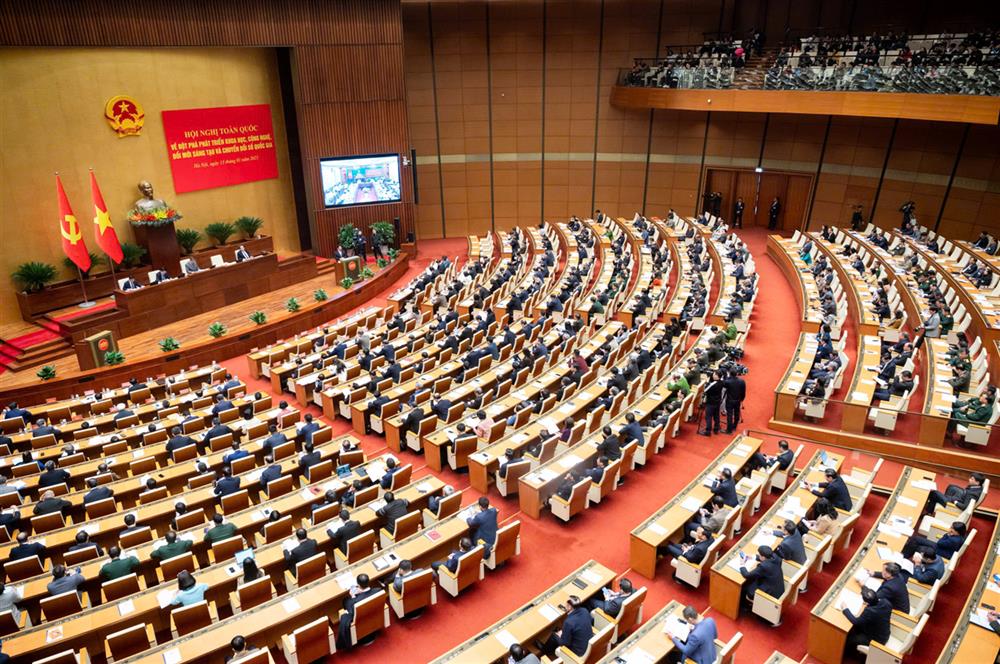
The law sits within a broader strategic architecture. Under Resolution No. 57, issued by the Politburo in December 2024, Vietnam aims to rank among the top three countries in Southeast Asia for AI R&D by 2030, with AI identified as the top strategic technology under the Prime Minister’s national technology priorities. In Vietnam’s governance structure, a Politburo resolution means institutional alignment across ministries, state agencies, and public investment — not a target, but a directive.
Together, the AI Law and Resolution 57 give Vietnam’s AI development agenda something that talent and investment alone cannot provide: a stable, long-term foundation that businesses and partners can plan around.
VTI’s Place in Vietnam’s AI Story
The three forces covered in this piece – talent, ecosystem, and policy – are not developing in isolation. They are reinforcing each other, and the pace is accelerating. For technology companies operating in Vietnam, the question is less about whether to engage with AI and more about how quickly they can build the capability to do so meaningfully.
At VTI, we have been asking that question for some time. Long before AI became a headline, we invested in researching, building, and applying it within our own products and delivery processes – learning firsthand what it takes to turn emerging technology into real-world value. That foundation informed a clear strategic direction for 2026: an AI-First approach, centered on transforming every engineer at VTI into a fully AI-augmented professional.
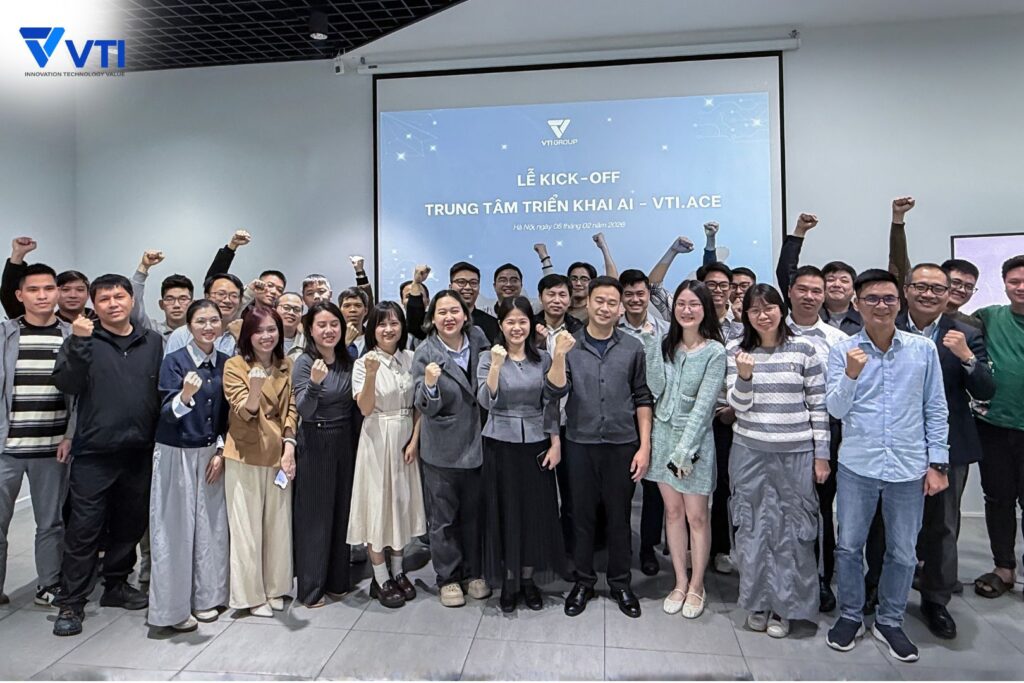
To execute on that commitment, we launched VTI.ACE, our AI Center of Excellence, in February 2026. VTI.ACE serves as the operational hub for driving, standardizing, and scaling AI adoption across the entire organization. It leads R&D into emerging GenAI technologies, embeds them into engineering workflows and delivery standards, and drives company-wide adoption of V-Copilot, our GenAI-powered coding assistant built to double developer productivity. The goal, as our COO put it, is to ensure that we are not only delivering AI products but using AI to build all software better and faster.
Vietnam’s AI ecosystem is providing the conditions to make that possible — the talent, the infrastructure, and increasingly the regulatory clarity to operate and grow with confidence. We intend to make the most of it.
References
- Vneconomy, Vietnam ranks 6th among 40 surveyed countries for World AI Index, 2025
https://en.vneconomy.vn/vietnam-ranks-6th-among-40-surveyed-countries-for-world-ai-index.htm - Vietnamnews, Going global revolutionises hiring at tech and creative firms, 2024
https://vietnamnews.vn/economy/1661226/going-global-revolutionises-hiring-at-tech-and-creative-firms.html - Vnexpress, Vietnam’s AI dreams run into a talent shortage wall, 2025
https://e.vnexpress.net/news/tech/vietnam-innovation/vietnam-s-ai-dreams-run-into-a-talent-shortage-wall-4960374.html - Vnexpress, AI job demand to surge, salaries projected 50% higher than other IT roles, 2025
https://e.vnexpress.net/news/tech/tech-news/ai-job-demand-to-surge-salaries-projected-50-higher-than-other-it-roles-4848138.html - Vietnamnews, Việt Nam emerges as tech talent powerhouse, 2025
https://vietnamnews.vn/economy/1695782/viet-nam-emerges-as-tech-talent-powerhouse-data.html - Vietnamnews, More actions urged to be taken to have 50,000 AI, semiconductor workers, 2025
https://vietnamnews.vn/economy/1720714/more-actions-urged-to-be-taken-to-have-50-000-ai-semiconductor-workers.html - Vietnamnews, Two excellence networks for AI and semiconductor training launched in HCM City, 2025
https://vietnamnews.vn/society/1727575/two-excellence-networks-for-ai-semiconductor-training-launched-in-hcm-city.html - VietnamPlus, Vietnam eyes new approach to high-quality AI workforce training, 2025
https://en.vietnamplus.vn/vietnam-eyes-new-approach-to-high-quality-ai-workforce-training-post325259.vnp - Theinvestor, Nvidia raises the Vietnam entity’s capital 11-fold as part of local expansion, 2025
https://theinvestor.vn/nvidia-raises-vietnam-entitys-capital-11-fold-as-part-of-local-expansion-d16886.html - InvestVietnam, The State of AI in Vietnam for 2025
https://blog.investvietnam.co/the-state-of-ai-in-vietnam-for-2025/#Foreign-Direct-Investment-(FDI)-and-Venture-Capital-(VC)-Trends-in-AI-Startups - Governmentnews, First-ever Law on Artificial Intelligence approved, 2025
https://en.baochinhphu.vn/first-ever-law-on-artificial-intelligence-approved-111251211093619398.htm - MIC, AI Law takes effect, anchors national governance framework, 2026
https://beta-en.mic.gov.vn/ai-law-takes-effect-anchors-national-governance-framework-197260305171154828.htm